FOLLOW ME ON TWITTER AND YOUTUBE

@JaneAustenCode
https://www.youtube.com/watch?v=vKYzhndOGsI https://www.youtube.com/watch?v=G9WkpqjJPR4
(& scroll down to read my literary sleuthing posts)
Thanks! -- Arnie Perlstein, Portland, OR

Monday, July 27, 2009

Wayne Booth and me re the doubleness of Emma

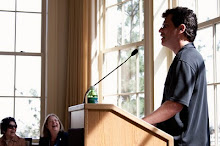
During the Q&A after my Chawton House talk about Jane Fairfax’s concealed pregnancy, one of the delegates who listened to my talk (and I am upset with myself for not having spoken afterwards to that intelligent young woman, to find out her name—and if anyone reading this was also present and knows who she was, please let me know!) and who asked me a very perceptive question. She asked, how does the shadow story of Emma inform our appreciation and understanding of the overt story of Emma?

The answer I came up with at the time was that the overt story, with its bright comic tone and romantic denouement, and the shadow story, with its dark, cynical tone and decidedly anti-romantic ending, were two parallel fictional universes separated by a wide chasm of interpretation, and really did not have anything in common other than sharing the same characters and superficial reported action. However, I also said that in some way, JA had a didactic purpose in this double story construction, in that each was intended by JA as a corrective to the extremes of the other. I.e., JA wanted her readers to strike a balance between these polarities in their perceptions of the real world around them, finding a way to love without romantic delusion, finding a way to be wary and sensible, without descending into misanthropy and hatred.

I was, however, only partly happy with my answer, and made a mental note to try to improve that answer at some point. Perhaps, subconsciously, that is what led me back today to JASNA’s website, where, slowly but surely, they’ve been putting more and more of the old issues online, which is a very welcome development.

So I was browsing there ostensibly to see what new stuff was available since my last visit a few months ago, and found that the 1981 and 1982 issues were now available online. But, after looking at those newly accessible issues, I went on to browse again in the 1983 issue, which I had read a few months ago, and happened to reread Wayne Booth’s essay there, instantly recalling that I had initially read it with great approval, without consciously remembering the details of why I had liked it so much.

This time, however, having in the intervening months pulled together a lot of my thinking about the shadow story of Emma in writing up my presentation, I realized that Booth’s wisdom had penetrated my subconscious during that first reading, and that Booth had himself given a pretty good answer to that question that was posed to me at my Chawton presentation, similar to mine and yet much more elegantly thought through and composed!

The subconscious is an amazing tool, and I’ve learned not to question it, but to follow my seemingly random inclinations in doing my research, as time and again, I am led to precisely the thing I am looking for.

Anway, first I give you the link to Booth’s article, and encourage you to read it all the way through for its full meaning and also its flavor—he was a great stylist in literary criticism, and it’s a pleasure to read even aside from its content.

http://www.jasna.org/persuasions/printed/number5/booth.htm

Persuasions #5, 1983, ppg. 29-40, “Emma, Emma, and the Question of Feminism”.

What is fascinating is that I actually did quote from another much earlier essay by Booth during my session, when I was reciting the brief history of the meme of Jane Fairfax as the shadow heroine of Emma. Here’s what Booth wrote in that regard in his chapter “Control of Distance in JA’s Emma” in his most famous book, the 1961 _The Rhetoric of Fiction_:

“We have only to think of what Emma’s story would be if seen through Jane Fairfax’s…eyes to recognize how little our sympathy springs from any natural view, and to see how inescapable is the decision to use Emma’s mind as a reflector of events—however beclouded her vision must be. “

Booth in 1961 did not see Emma as he did in 1983, but had Booth somehow been able to connect the dots over 22 years between that earlier flash of insight and his late conversion to the notion of JA as a sly feminist, he might have been led to consider the implications of what it might mean if JA had really intended Jane Fairfax not only to see Emma’s story, but to actually have her own compelling story concealed in the shadows of the novel, i.e., to be the shadow heroine of the novel.

Without further ado, then, the following are what I consider the most insightful, telling excerpts from Booth’s 1983 Persuasions article (and as you read, see if you can spot what Booth wrote which I now realize must have been the inspiration for the following line in my most recent revision of my talk: “the famously successful concealment in Emma’s overt story ironically contains within itself the seeds of its own deconstruction”):

BEGINNING OF BOOTH EXCERPTS: “.....In spite of everything I have said, we all know that any theory that leaves us resisting or repudiating any experience as wonderful as Emma offers must have something wrong with it. Perhaps you have already been far ahead of me in seeing what that something is. While it is true that the conventional form of Emma would be in itself harmful to both men and women, if it were accepted as Sir Edward accepts Lovelace’s charm, the saving truth is that Emma contains within itself the antidotes to its own potential poisons. While it does not in any sense repudiate the fun of pursuing the conventional form, it at the same time keeps the careful reader alert to the need for a double vision – a combination of joyful credulity about the events of the love plot, taken straight, and extreme sophistication about how men and women can hope to live together, in what we call life……That sophistication consists in part in the imaginative resistance that the work provides to its own conventional or formal preoccupations. By the author’s tone on every page, she asks us to imagine a world that does not permit us to believe what the conventional marriage plot tries, as it were, to teach us. ….Some readers have considered such passages [the deflation of Emma’s romantic climax] to be dodges, signs of Jane Austen’s own sexual inhibitions or lack of novelistic skill – poor woman, she just did not know how to write a love scene! I suggest instead that they are signs of a novelist who knows her double task: how to make a conventional form work, while making it work for matters unconventional. ….When I first reported views of this kind, more than two decades ago, I rejected them. Though I still see them as at best half of what should be said, I think my response was too simple. My point here is that unless we can somehow incorporate something like an ironic vision of the ending, even while pretending not to, even while enjoying the fairy tale to the full, we are indeed confirming its capacity to implant a harmful vision of the sexes. In other words the ending is indeed a happy ending, not the least ironic, given the world of the conventional plot, a world that we are to enter with absolute whole-heartedness. And yet, simultaneously, we are taught by this work the standards by which the ending must be experienced as we experience fairy-tales or fantasies; the implied author has been teaching us all along what it means to keep our wits about us, and how we must maintain a steady vision about the follies and meannesses in our world…..Still it would be folly itself to pretend that the dangers I earlier described will simply go away for anyone who reads with sufficient skill. We may tell ourselves that Jane Austen knows, and assumes that we will know, that Knightley is a fantasy figure, the wise magician who promises us from the beginning that all will be well in this created world, even though it can never be entirely or permanently so in our own. But the power of Jane Austen’s realized conventional form, the delicious happiness she makes us feel in the “perfect union” of two almost perfect creatures, the weaker one of whom almost deserves the stronger – that power must surely be matched by a kind of reading that is as powerful and courageous and sensitive as Jane Austen’s reading of her predecessors. She knew better than to pretend that fictions are not dangerously loaded weapons for all who grasp them seriously. And she thus would welcome, I like to think, the probing questions that feminist critics have been teaching us to ask. Her kind of critical spirit, applied in 1983 to her kind of works, will not leave those works unmodified. But to me it is wonderful to discover that most of the modifications, most of what we learn by asking the questions raised by feminist criticism, leave Jane Austen looking perhaps even greater than she did before.”

Friday, July 24, 2009

Another Clue about Lucy Steele's Married Name

Before I disclose the answer to my little riddling question about the significance of Lucy Steele's married name, here is one last clue, from chapter 49 of S&S:

"Dear Sir , -- Being very sure I have long lost your affections, I have thought myself at liberty to bestow my own on another, and have no doubt of being as happy with him as I once used to think I might be with you; but I scorn to accept a hand while the heart was another's. Sincerely wish you happy in your choice, and it shall not be my fault if we are not always good friends, as our near relationship now makes proper. I can safely say I owe you no ill-will, and am sure you will be too generous to do us any ill offices. Your brother has gained my affections entirely, and as we could not live without one another, we are just returned from the altar, and are now on our way to Dawlish for a few weeks, which place your dear brother has great curiosity to see, but thought I would first trouble you with these few lines, and shall always remain, -- Your sincere well-wisher, friend, and sister,

"LUCY FERRARS.

"I have burnt all your letters, and will return your picture the first opportunity. Please to destroy my scrawls; but the ring, with my hair, you are very welcome to keep."

Elinor read and returned it without any comment.


Do any of you have an comment on my question???? ;)

Cheers, ARNIE

Picture (or Figure) in the Carpet

"If you want a genuine continuation of Austen don't buy an idiot sequel; rather go for Margaret Drabble's The Picture in the Carpet.....It swirls about an aunt who
loved jigsaws as did and does Drabble.....she turns to puzzles to calm her and remembers back..... She does relaxed research on jigsaws and we learn a lot about them and children's games. ARe they a game? I think so: you are working against the puzzle maker. You achieve something when all the pieces are in place. I do
have a method: first you make the frame and then you work on different portiosn of the picture. Of course the puzzle maker makes this second step
hard. Since the competition is at a distance, it's relaxed and you have aesthetic pleasure putting the puzzle together."

Ellen, that is a wonderful post, thanks!

In my considered opinion, Drabble and Byatt (I had for some time subconsciously conflated them in my mind, but I did not know--or at least I don't remember reading--they were actually sisters--now it makes perfect sense, they have apparently been partners in a certain kind of literary exploration, the same as the Austen sisters and the Bronte sisters, among others)--both have demonstrated, I think, a very strong awareness that JA's novels are themselves puzzles (_Possession_ to me is in no small part about Jane Austen, both her letters and her novels), but neither Drabble nor Byatt knew quite know how to fit the puzzle pieces together in a coherent whole.

"Which gets us to JA: famously there is a puzzle in MP -- free indirect speech from either Julia or Maria:..."

Yes, that is a good catch by you, but you should also relate the idea of puzzles in JA's novels to the novel which itself is explicitly filled with all sorts of puzzles, it is in fact a veritable Parthenon of puzzles---_Emma_.

And here's a catch for you---did you know that Henry James wrote a short story called "FIGURE in the Carpet"????? Read it, you will see the shadow of JA there as well!!!!!!! ;)

Wednesday, July 15, 2009

Troilus and Cressida and Jane Austen

On the good advice of my son Henry, I made sure I went to at least one performance at the Globe Theatre as a groundling, standing right next to the stage. The play I saw was Troilus and Cressida, and it was a first rate performance.

I have read, closely, over 20 of Shakespeare's plays during the past couple of years, as part of my gaining a greater understanding of the allusive significance of Shakespeare in Austen's fiction (and of course, also enjoying the Shakespeare for its own merits as well). But T&C is one of his plays I had not previously read closely, I found it difficult to engage with in print, and thought seeing this performance would be an ideal way to "get" the play sufficiently to be able to then read it with much greater understanding.

Anyway....the reason I thought of posting about it here was remembering, as I watched, the one detail in the play that I had discovered a few years ago was a DEFINITE allusion by Jane Austen, that was not previously noted by any other critic, to the best of my knowledge.

It's the scene early in Act IV, "the morning after", when Troilus and Cressida are engaging in playful sexual banter, and the following exchange occurs:

CRESSIDA
Did not I tell you? Would he were knock'd i' the head!

Knocking within

Who's that at door? good uncle, go and see.
My lord, come you again into my chamber:
You smile and mock me, as if I meant naughtily.

TROILUS
Ha, ha!

CRESSIDA
Come, you are deceived, I think of no such thing


Do you see the allusion by Jane Austen? It's unmistakable, and very very clever, and it's also coded by character names. I think that is enough hints to point you to the right Austen character.

;)

Sunday, July 12, 2009

Chawton House Conference on New Directions in Jane Austen Studies

It's been a long while since I've used this blog, always having it in the back of my mind that one day at the right time, I would begin to use it the way most bloggers use their blogs. That time has, I think, come, as the above-referenced 3-day Conference on New Directions in Jane Austen Studies that was held at Chawton House has now come to an end, where I made a presentation about the shadow story of Emma. While I am working on my book about Emma, I thought it would be fun to post here now and again, and see if anyone would be interesting in talking with me about the shadows in Jane Austen novels, the subtext that is rarely noticed or discussed in most Janeite group conversations.

Let me start with a big caveat, however, the one I stated in my presentation at Chawton---I believe that each Jane Austen novel has TWO valid stories "in" it--one is the overt story, which you get when you read the novel more or less in a linear, straightforward way, which is very romantic, the other is the shadow story, which is what you get when you consistently read AGAINST the grain, hearing the irony that is latent in so many of the words and phrases in the novel, which is not so romantic, and is darker in terms of the characters.

Regardless of how that might otherwise sound, I do NOT mean to suggest that the overt story is not what "really" happens in the novel, not at all! It means there are two parallel fictional universes that Jane Austen intended to create, and it seems to me that if she did that, she wanted her readers to be aware of BOTH of them. One fascinating aspect of that structure is the question of WHY she'd want her readers to read both of them, and that is a topic that I hope will be discussed here.

So, as a kind of "debut" for this blog, I will toss out a teaser for the day, a question about Jane Austen that points to her shadow story in Sense and Sensibility. The question is, what is the married name of Lucy Steele, can you find where it is used in the novel itself, and what is its special significance?

Those of you who've already seen my handout at the conference already have the answer there, so if you do, please don't cheat! Let's give someone who hasn't seen the answer a chance to figure it out....

Okay, signing off from Winchester,

ARNIE

PS: I had a funny experience today as I was walking around in Winchester (where I am staying an extra day so I can do a little research at the Hampshire Record Office which is located here right next to the train station where I'll catch a train to London tomorrow afternoon)....I of course went to pay my respects at the little house on College Street, which (I hadn't realized before) is located RIGHT behind Winchester Cathedral...and I popped my head into the very well stocked bookstore located two doors down from that house--I was chatting with the woman at the desk--I asked her if she had ever had any interesting conversations with anyone who came in the store, in relation to Jane Austen--you'd think that the bookstore is THERE, after all, precisely because most of the people who'd come down that little street with only residential homes, would be there for one reason, and they'd be people who read a lot of books.

Well, she advised me that she really wasn't into Jane Austen even though she was a literature major in university, because Jane Austen wasn't ironic or sarcastic enough for her. I tried for 2 minutes to talk her out of that misconception, but she was not buying what I was selling, so I left her to her special form of purgatory, working in a bookstore 20 feet away from a place where people from all over the world come to pay respects to one of literature's greatest geniuses, and being so utterly, incredibly wrong about that writer! ;)

Friday, September 14, 2007

Why did Jane Austen keep it all secret?

The question I am asked as often as any other, when discussing my discoveries, is, "Why would JA keep all of this a secret?". It is a good question, and I think I finally have come up with a good answer.

Since the beginning of this year, my first answer has been the example of the savage (albeit totally justified) satire of the Prince Regent contained in the second charade of _Emma_, which Colleen Sheehan discovered, and gave a good preliminary interpretation of, in her two Persuasions articles earlier this year. If any of you have missed it, here is the link, which I first gave in January:

http://www.jasna.org/persuasions/on-line/vol27no1/sheehan.htm

That HAD to be kept secret, or else JA might very well have faced consequences similar to those suffered by Leigh Hunt and his brother in 1812. Especially if at some point anyone realized further that the satire of the Prince Regent in the novel was not confined to some name-calling (the "Prince of Whales"). After all, Lamb, anonymously, and Cruikshank, openly, had covered that ground pretty well and very publicly by the time _Emma_ was published.

But what if some clever elf in the PR's circle of friends and toadies had become aware of that joke, and had wondered whether that was all; and had actually sat down and read the novel all the way through. Perhaps he would then have realized that in _Emma_ this joke was only the tip of a very large iceberg (the tail/tale of a very large whale?) in which that "gentleman's" entire life (body) was exposed to extended ridicule in its full ugliness.

Ending with JA's having used Clarke as her unwitting dupe to induce the Prince Regent to ask that _Emma_ be dedicated to him--truly the icing on the cake (the krill in the baleen?).

Dangerous indeed, and JA would have had to worry not only for herself, but her entire family, who could have borne the brunt of any retribution against her. The stakes were high indeed, so it was crucial that she have total deniability, to be able to say "Of course not! Would I, a lady, write such ridiculous things?" Just in case.

It's interesting to note in that regard that the one overt reference to the Prince Regent as a not very charming fellow is in one of the 4 surviving letters that JA wrote to Martha Lloyd, and not in one of the nearly 100 surviving letters which she wrote to her sister. Perhaps part of the thinking here on CEA's and JA's part was to make sure there was nothing in JA's surviving letters, circa 1815, which could have adverse consequences were they to fall into the hands of friends of the Prince. And, luckily for us, the destruction wrought on Martha's letters by Frank's daughter Cassandra missed that crucial letter which has, today, immortalized JA's actual very low opinion of the Prince Regent in unmistakable fashion.

But, aside from the danger of some sort of direct retribution, there is another side to this, a more subtle one, having to do with JA's career, and her artistic legacy. Today, by chance, I stumbled across a discussion of the following famous line from NA in Mary Waldron's 1999 _JA and the Fiction of her Time_:

“A woman especially, if she have the misfortune of knowing any thing, should conceal it as well as she can.”—

Waldron pointed out that this refers to Gregory, _A Father’s Legacy_, p. 13: “But if you happen to have any learning, keep it a profound secret, especially from the men, who generally look with a jealous and malignant eye on a woman of great parts, and a cultivated understanding.”

However, a quick archives search here in Janeites took me back to a 2001 post by Ursula Rempel, which took Waldron several interesting steps further:

"I am struck by passages in _Northanger Abbey_ which strongly resemble the works of Ann Murry, John Gregory, and Priscilla Wakefield. (We had a discussion on Austen-L list in the Spring of 1997, and Eugene McDonnell [quoted that passage from NA] I wrote back with the following snippets from Gregory, Murry, and Wakefield: [Quoting the Gregory, from 1774]

Murry: "Knowledge ought not wholly to be concealed; yet like beauty, it appears most amiable seen through the veil of diffidence and modesty." _Mentoria: or the Young Ladies' Instructor_, 1778

If you carry on through the passage in NA, Wakefield shows up: "Ignorance, vanity, and imbecility, are the characteristic imperfections in the female sex, and may be considered as at once constituting their reproach, and their misfortune." (In the _Lady's Monthly Museum_, 55, 1798.)

Austen writes (in NA, 125): " . . . in justice to men, . . . imbecility in females is a great enhancement of their personal charms, there is a portion of them too reasonable and too well informed themselves to desire any thing more in women than ignorance." The conduct books operate in various ways throughout the novels--not always as blatantly as my quotes above show. One example is the catechism Elizabeth is subjected to by Lady Catherine on the matter
of her "accomplishments." Education, decorum, and accomplishments are what the courtesy manuals are all about--and all resonate in the novels." [END OF REMPEL ]

As wonderful as Rempel's catches re Murry and Wakefield are, and are extremely resonant with the satire of the novels, particularly NA, I don't think they really apply to JA herself as a mature woman and novelist, during the past 8 years of her life. I seriously doubt that she concealed her genius from the men she met in her life, if those men showed themselves to have the sense to grasp what she was about.

In that final epoch of her life, the Gregory allusion is the most apt for understanding why, beyond the fear of actual some sort of prosecution against herself or her family, JA would go to what must have been a gigantic sustained artistic effort to create these astounding subtextual worlds (an achievement similar to what James Joyce accomplished in _Ulysses_), and then to conceal them so well that they are only today becoming visible in their fully glory, nearly 2 centuries later.

I think Gregory is spot on--JA was no shrinking violet, no young submissive wuss, she had tremendous courage--but she was also extremely pragmatic, and understood full well what had happened to the careers and the legacies of Wollstonecraft, of Mary Darby Robinson, and of a number of powerful women who had dared to openly challenge the patriarchy, the aristocratic and/or monied powerful men who ran England. Gregory might have been making a joke, but the big smear that was put on those important female figures showed it was no joke at all.

So JA found a way to have her krill and eat it too. She filled her novels with their sins, their hypocrisies, their full awfulness, but she submerged it a little, just enough to make it visible only to those with eyes to see, in apparent confidence that no one with contempt for women would even imagine that a woman could, or would even try, to pull off such a stunt. And apparently she was right.

I think that the world has only now caught up to her, and she's far beyond their revenge at this point. ;)

Saturday, July 28, 2007

Puzzle #2

I'm thinking of a story in which an anonymous "large-sized" gift is mysteriously delivered, and then some people speculate as to the possible identity of the donor, and the possible motivations, good and bad, for its having been made. Some time after the gift has been accepted, the donor of the gift returns and the donor's identity is eventually revealed, to almost everyone's great surprise. Nothing is ever quite the same again in the town.

Any guesses as to what story, what donor, what gift, and what town?

Hint: The answers have something to do with a word or words containing the letters W, O, D, H and S.